Junko Furuta: The Girl Who Lived 44 Days of Hell – The Most Horrifying True Crime Story Ever Told

The True Horror Behind Junko Furuta’s Story
Among the darkest and most disturbing true crimes in modern history, few cases can compare to that of Junko Furuta, a 17-year-old high school student from Japan who endured 44 days of unspeakable torture before her death in 1989.
Her tragic story is not just a tale of cruelty — it’s a haunting reminder of how real horror can be born not from monsters, but from human beings themselves.
Who Was Junko Furuta?
Junko was a bright and cheerful student from Misato, Saitama Prefecture. She was known for being kind, intelligent, and disciplined. In many ways, she represented everything good and hopeful in youth — which makes what happened to her even more terrifying.
On November 25, 1988, while riding her bike home from work, Junko was abducted by four teenage boys, all members of a local gang with ties to the Yakuza. The group included Hiroshi Miyano, Jo Ogura, Shinji Minato, and Yasushi Watanabe — names that would later become infamous in Japan.

The 44 Days of Pure Horror
The boys took Junko to Minato’s house, where they imprisoned her in a hidden room. For the next 44 days, she was subjected to unimaginable abuse — both physical and psychological.
Neighbors later reported hearing strange sounds and screams, but no one intervened. The kidnappers forced Junko to call her parents, pretending she had run away and was safe with friends.
During those weeks, her condition worsened rapidly. She was starved, beaten, and left in pain for days. Reports from the later investigation described acts of violence so extreme that even seasoned investigators were left traumatized.
By the 44th day, Junko’s body could no longer take it. She died from her injuries — severe trauma, burns, and infection. Her captors placed her remains in a concrete drum, which they left near Tokyo.

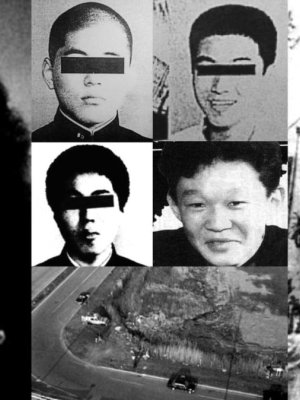
The four teenage killers of Junko Furuta (Hiroshi Miyano, Shinji Minato, Jō Ogura, and Yusushi Watanabe).
The Discovery and Public Shock
When the police finally uncovered the truth, Japan was shaken. The brutality of the crime dominated the news, leading to public outrage.
The young age of the perpetrators meant that they were tried as minors — a fact that caused even more anger. Their sentences were widely criticized as shockingly light given the nature of their crimes.
For many, Junko Furuta became a symbol of innocence destroyed — and a reminder of the flaws within the justice system.
The Internet Legacy
Over time, Junko’s story spread across the internet, especially through forums and horror communities. She has been featured in documentaries, podcasts, and horror blogs around the world.
Online, her case is often referred to as “The 44 Days of Hell”, a title that perfectly captures the unbearable suffering she endured.
To this day, people discuss her story not as entertainment, but as a tragic true horror — one that forces us to confront how far human cruelty can go when empathy disappears.
The Real Meaning Behind the Horror
Unlike fictional monsters, the horror of Junko Furuta’s case lies in its realism. It reminds us that evil can hide behind ordinary faces — classmates, neighbors, even friends.
That’s why this story continues to resonate decades later: it is not about ghosts or demons, but about how humanity itself can turn monstrous.
Related Cases
If this story disturbed you, you might want to read:
Final Thoughts
Junko Furuta’s tragedy stands as one of the most terrifying true stories ever recorded — not because of supernatural elements, but because it’s all real.
In a world obsessed with fictional horror, her story proves that the darkest nightmares sometimes happen in daylight.
Check an interesting video about this story made by I Could Murder A Podcast: